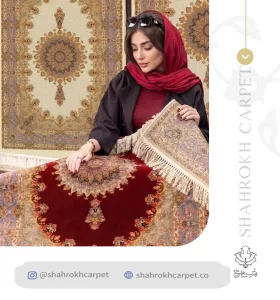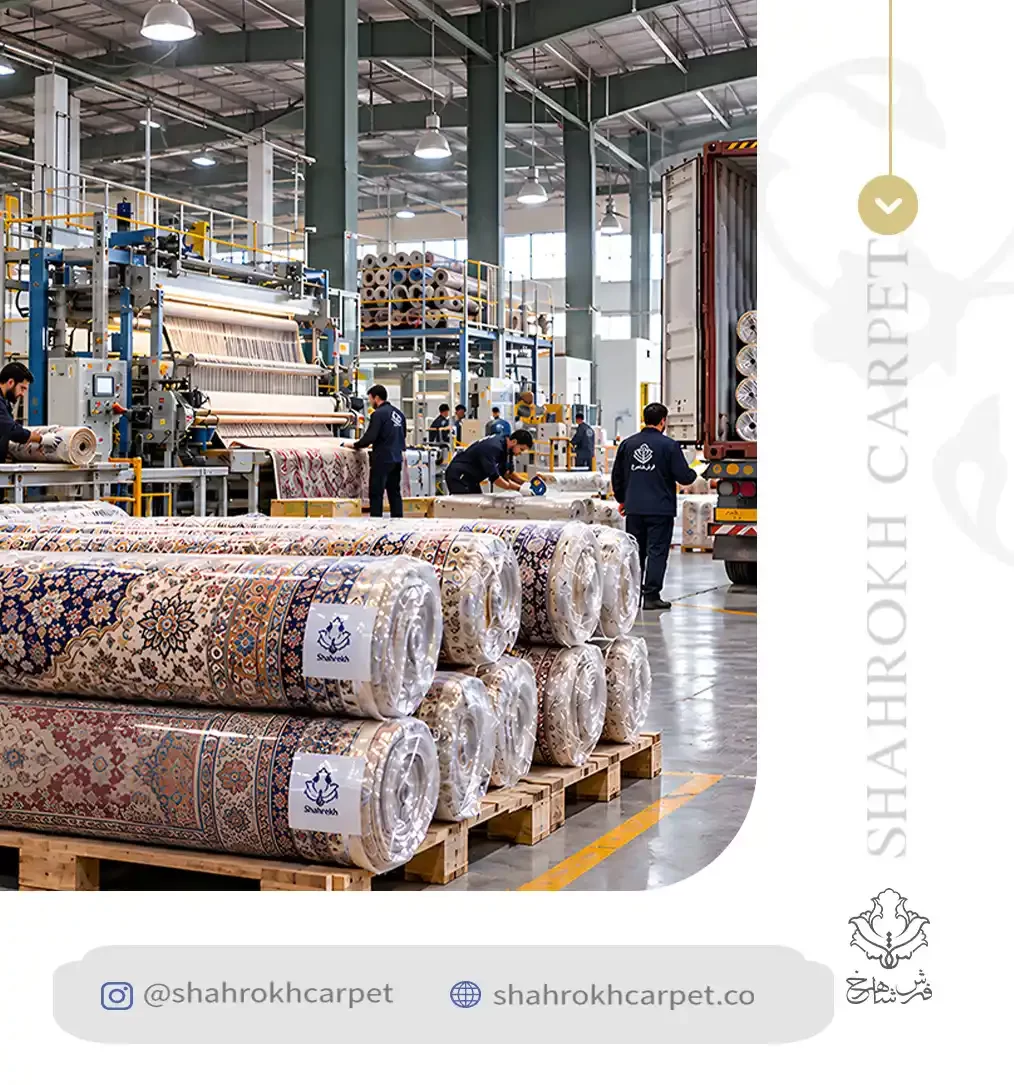
The real difference between a “good wholesale price” and a genuinely competitive buying price is often not the rug itself. It is the number of commercial layers sitting between your purchase order and the weaving line. For large importers, regional distributors, and chain trading companies, direct factory rug sourcing in Kashan can change that equation: fewer commercial markups, faster access to production information, clearer specifications, and more control over repeat orders.
Kashan and the neighboring Aran-and-Bidgol industrial area form one of Iran’s best-known centers for machine-made carpet manufacturing. Producers in this cluster manufacture high-density lines including 1200-reed carpets, and published factory specifications commonly pair 1200 reeds with 3600 picks per meter and acrylic pile yarn.That combination is attractive to wholesalers because the high construction density can support intricate visual detail while the machine-made process is suited to repeatable commercial production.
Why Large Buyers Look Beyond the Distributor Price
Middlemen are not automatically a problem. A capable importer, sourcing agent, or distributor may solve logistics, financing, consolidation, language, inspection, and after-sales issues. The problem begins when a buyer is paying for several commercial layers without receiving equivalent value from each one.
For a high-volume 1200-reed program, every unnecessary layer becomes part of the cost structure. More importantly, it can weaken the flow of information. A buyer may request a particular pile composition, colorway, finishing method, production reference, size mix, or carton mark, yet that request has to travel through multiple companies before reaching the actual manufacturer.
The quotation eventually comes back, but an uncomfortable question remains: what exactly are you buying?
Direct sourcing shortens that chain. Instead of negotiating only around a trader’s catalog, the purchaser can negotiate around the actual production specification. That is the deeper reason sophisticated importers seek to bypass rug middlemen. The objective is not simply to chase the lowest number on an invoice; it is to gain control over the variables that protect resale margin.
For companies ordering containers rather than individual rugs, information can be almost as valuable as price. Knowing what will be woven, how it will be finished, how it will be packed, and whether the same specification can be reordered six months later creates a much stronger purchasing position.
What “Factory Direct” Should Actually Mean
A direct offer should be more than a message saying, “best factory price.”
Serious procurement begins with verification. The supplier should be able to identify the manufacturing entity and production location and provide the product specification, available dimensions, packing method, production assumptions, quality-control process, and delivery term used in the quotation.
For 1200-reed rugs, the purchase specification needs to say considerably more than “1200 reeds.” Published Kashan factory catalogs demonstrate why. Commercial 1200-reed collections may specify 3600 picks per meter, acrylic pile, cotton-polyester weft, polyester-staple warp, pile heights of roughly 6–7 millimeters depending on the collection, multiple colors, and standard dimensions such as 1.5 × 2.25, 2 × 3, 2.5 × 3.5, and 3 × 4 meters.
Those specifications should not be assumed to be identical across every manufacturer or collection. That is precisely why professional buyers freeze an approved technical specification and reference sample before mass production.
This is where direct factory rug sourcing starts creating commercial value. Two offers can be compared line by line rather than by vague product names. If one carpet is cheaper because its yarn, pile height, weight, finishing, color count, or packing differs, the buyer can discover that before shipment rather than after the container reaches the warehouse.
A low quotation is useful. A low quotation you fully understand is considerably more useful.
The Buying Process That Protects Your Margin
The strongest direct-purchase process is surprisingly disciplined.
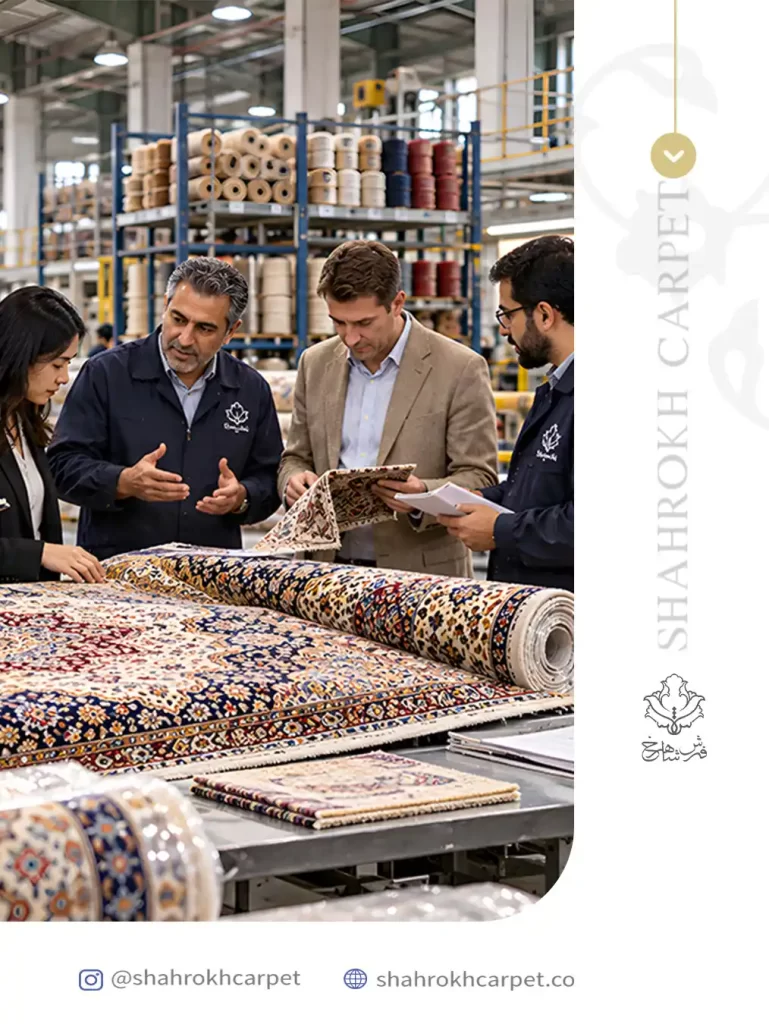
Start with a structured request for quotation. Include required sizes, quantity by size, designs or collections, colorways, pile material, reed and density specification, finishing requirements, packing, private-label requirements where applicable, destination, and requested delivery term. Ask separately for the expected production schedule and quotation-validity period.
Next, approve a physical sample or an unmistakably identified production reference. For repeat business, a retained golden sample provides purchasing staff, quality inspectors, and the factory with the same benchmark.
Pre-shipment acceptance criteria should also be agreed before manufacturing begins: dimensions, visible weaving defects, shade consistency, finishing, labeling, packing, and ordered quantity. International Trade Centre programs on export-quality management similarly emphasize testing, inspection, certification, and reliable quality infrastructure as core elements of competitive export supply.
Then examine the Incoterm rather than looking only at the product price. Incoterms define how costs, delivery responsibilities, and risks are divided between buyer and seller.
EXW, for example, gives the buyer extensive responsibility and can create practical complications with export clearance in international transactions. The International Chamber of Commerce specifically advises parties to consider whether FCA is more suitable for cross-border movements: under FCA, the seller handles export clearance and delivers the goods to the nominated carrier at the agreed point.
For a container-scale buyer, that operational detail may ultimately matter more than a small difference in nominal ex-factory price.
Buy on Landed Cost, Not on the Cheapest Invoice
The factory quotation is only one component of a profitable shipment.
A professional buyer should compare landed cost per sellable square meter or per sellable piece, incorporating the factory price, inland transport, export handling, freight, insurance where applicable, destination charges, customs and taxes, inspection expenses, compliant banking costs, and a realistic allowance for defects or shortages.
This is where buying closer to the manufacturer can create an advantage. Removing unnecessary commercial margins may improve the starting cost, while better specification control can reduce costly surprises later.
But credibility requires acknowledging something many sales pages avoid: factory direct is not automatically cheaper in every situation.
A middleman who efficiently consolidates small orders, holds stock, extends legitimate credit, manages complex freight, or provides valuable local support may be earning the margin being charged. Direct sourcing works best for buyers with sufficient volume, forecasting ability, and procurement infrastructure to assume more of those functions themselves.
For chain retailers, wholesalers, and major trading companies, that trade-off can be particularly attractive. Scale makes it easier to plan mixed-size orders, standardize packaging, develop repeatable collections, forecast replenishment, and coordinate production periods.
The goal should therefore not be a one-time bargain.
It should be a repeatable supply line with fewer pricing, specification, and quality surprises.
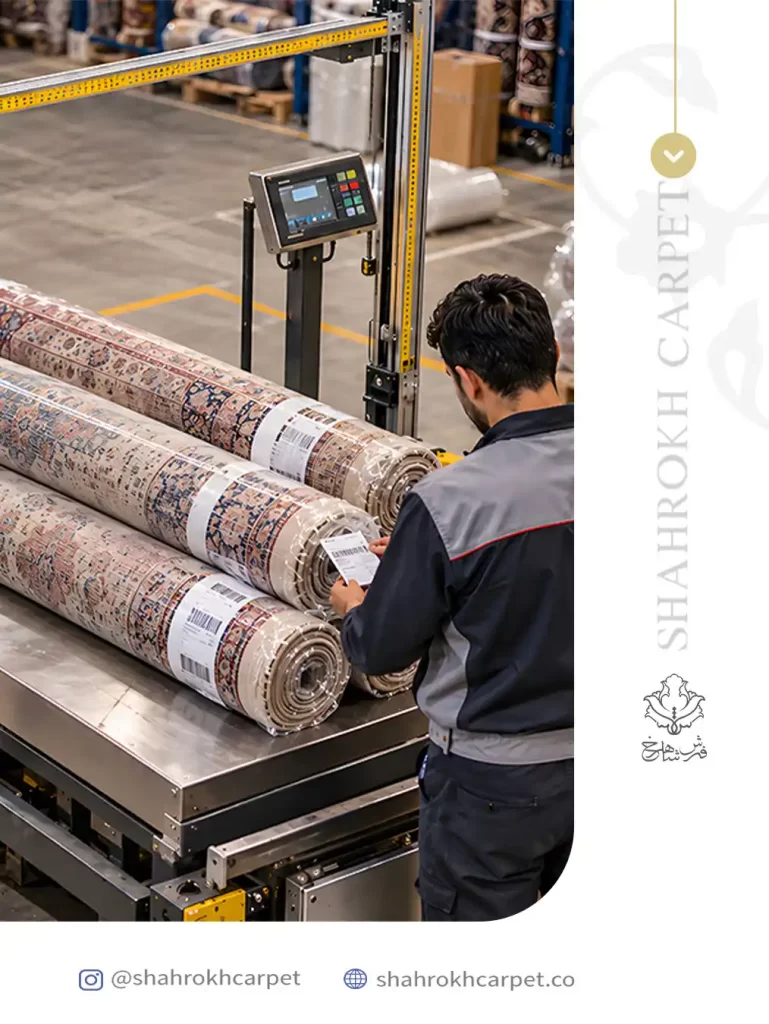
Why 1200-Reed Kashan Rugs Fit a Wholesale Strategy
The commercial attraction of 1200-reed machine-made rugs becomes clearer when viewed from the retailer’s side.
“Reed” describes the transverse construction density of the carpet; Kashan industry descriptions define a 1200-reed carpet as having 1200 transverse units per meter, while 3600 density refers to its longitudinal construction. The finer construction gives manufacturers greater scope for detailed motifs, making 1200-reed lines particularly suitable for designs intended to create a refined, hand-look visual impression. Kashan manufacturers currently publish 1200-reed ranges across Persian, Kashan, Isfahan, French-inspired, Afshan, and other traditional design families.
For a wholesaler, that variety creates an important merchandising advantage: one technical platform can support numerous designs, color backgrounds, and room sizes.
Instead of sourcing unrelated products from several intermediaries, the buyer can potentially build a coordinated assortment around an agreed construction. Different patterns can address different consumer tastes while purchasing and quality-control teams continue working from a familiar technical standard.
Direct factory access can also put the importer closer to current catalogs, production availability, size possibilities, and design development rather than waiting for a secondary wholesaler to refresh inventory. Kashan manufacturers openly market bulk orders and international shipment support, demonstrating that factory-level wholesale supply is already an established part of the region’s commercial model.
The safest purchasing principle is simple:
Do not buy the words “1200-reed.” Buy the documented construction, approved design, finished appearance, packing standard, and repeatability behind them.
Bypass Commercial Layers, Not Compliance
There is an essential distinction between bypassing middlemen and bypassing rules.
Buying rugs directly from Iran still requires compliance with the destination country’s import laws, sanctions framework, customs rules, banking requirements, and counterparty-screening obligations. U.S. restrictions deserve particular attention: OFAC maintains a broad Iran sanctions framework and specifically defines carpets produced for export as part of Iran’s textile sector. Large buyers should therefore complete sanctions, legal, customs, and banking checks before treating any Iranian factory quotation as commercially executable.
The same professional caution applies to visiting suppliers. Under normal conditions, physically seeing weaving, finishing, quality control, warehousing, and packing can be extremely valuable. At present, however, security conditions must take priority. As of August 26, 2026, U.S., British, and German authorities advise against travel to Iran. For many overseas buyers today, live production walkthroughs, third-party factory audits, approved samples, video inspections, and independent pre-shipment checks are therefore more responsible ways to establish direct factory visibility.
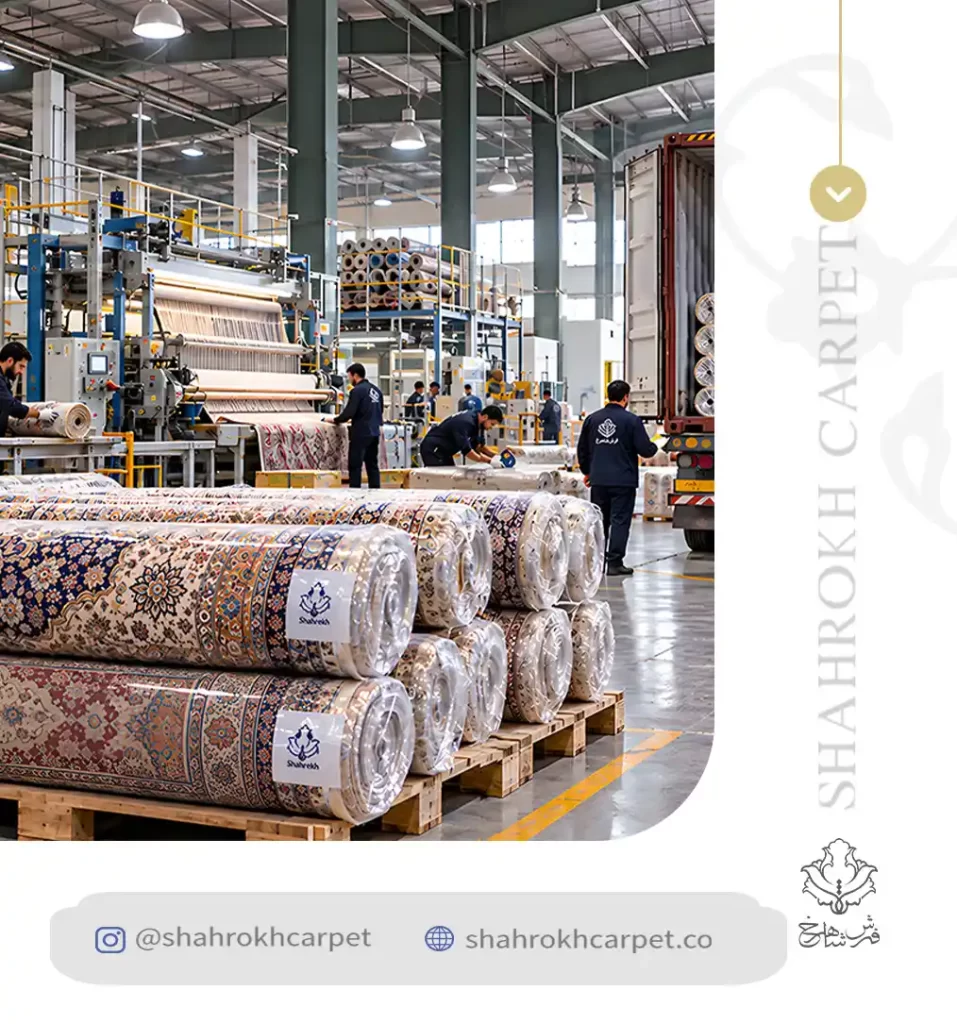
For qualified buyers in markets where the transaction is lawful, the next step should not be:
“What is your cheapest 1200-reed rug?”
A far more powerful sourcing question is:
“Quote this exact construction, this design range, this size mix, this quantity, this packing standard, and this delivery term.”
That question changes the conversation from retail-style bargaining to professional procurement.
A capable factory sales department is then positioned to do what manufacturers do best: present current production options, match designs to the buyer’s market, clarify construction differences, organize quantities around the required size mix, and prepare a production-level commercial offer.
For high-volume traders, that is the real opportunity behind buying rugs directly from Iran: not simply removing a name from the supply chain, but moving closer to the source of cost, quality, information, and production itself.