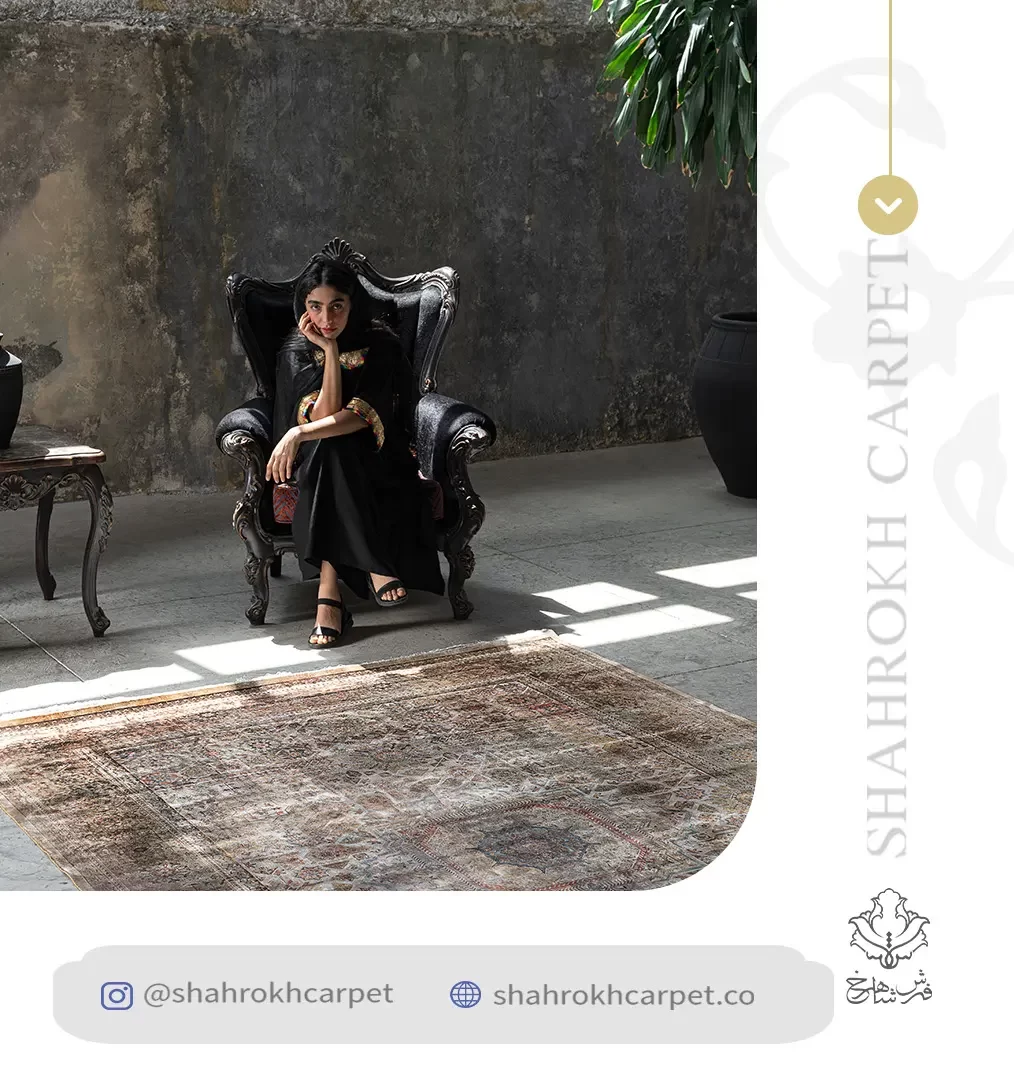
In the world of luxury interiors, the most memorable spaces are rarely defined by furniture alone. They are shaped by carefully selected objects, distinctive materials, artistic details, and pieces that reflect the personality of their owners. For discerning collectors and design-conscious homeowners, a rug can be far more than a floor covering. It can become a focal point, a decorative statement, and an essential part of a thoughtfully curated interior.
This is where Shahrokh’s 1700 reed Persian silk-design rugs offer a distinctive opportunity for luxury rug galleries, interior designers, antique dealers, and premium home furnishing retailers.
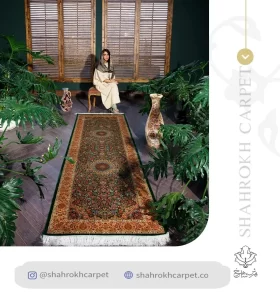
Combining exceptionally fine weaving with intricate Persian-inspired patterns and carefully executed hand-finished details, these rugs are designed for customers who appreciate refinement, originality, and decorative value. Their appeal extends beyond conventional floor placement. Depending on their dimensions and the surrounding interior, they can be displayed beneath furniture, placed on a decorative table, incorporated into an artistic arrangement, or presented as a wall hanging.
For retailers serving affluent international markets, this versatility opens up new ways to introduce Persian design to customers who collect art, appreciate antique objects, and invest in distinctive interior decoration.
The opportunity is not simply to sell another fine rug. It is to offer a decorative piece that brings together Iranian design heritage, modern weaving precision, and the character of hand-finished craftsmanship.
Why 1700 Reed Persian Rugs Appeal to the Luxury Market
Luxury customers look for distinctive pieces that reflect their taste and complement carefully curated interiors. With its fine weave, intricate patterns, short pile, and elegant silk-like appearance, a 1700 reed Persian rug can serve as more than a floor covering. It can become a decorative focal point in luxury homes, galleries, and interiors featuring art and antiques. For retailers, presenting these rugs as distinctive decorative pieces rather than ordinary carpets creates a stronger appeal for design-conscious buyers.
The Fine Art of 1700 Reed Silk-Design Rugs
A 1700 reed Persian rug belongs to the finest categories of machine-woven carpets, offering the precision needed to reproduce intricate floral motifs, elaborate borders, medallions, and subtle color transitions. Its fine weave, short pile, and refined surface help keep the pattern clear and elegant, making it well suited to luxury interiors.
In Shahrokh’s collection, the silk-design aesthetic adds a delicate sheen that enhances the visual depth of decorative details. However, silk-design describes the rug’s appearance and style, not necessarily its fiber composition, which should always be verified through the manufacturer’s specifications.
Together, the fine construction, detailed Persian-inspired patterns, and elegant finish make these rugs attractive decorative pieces for luxury homes, art galleries, and premium rug showrooms.
Hand-Finished Details: Where Craftsmanship Adds Character
One of the distinctive aspects of Shahrokh’s 1700 reed rugs is the contribution of hand-finished details to the overall presentation.
Depending on the specific model, finishing work may include hand-sewn edges, hand-finished fringes, hand-applied overcasting, additional knotting details, and careful surface finishing. These processes require human attention beyond the primary weaving stage and contribute to the final appearance of the rug.
The distinction between machine weaving and hand finishing is important. The main body of the rug is machine-woven, while selected finishing operations are completed by hand. This combination brings together the precision and consistency of modern production with the attention to detail associated with skilled manual work.
Hand finishing can also introduce subtle variations. Small differences in the appearance of fringes, edges, or other manually completed details may reflect the nature of the finishing process. When they fall within acceptable quality standards, such variations can give the finished object a character that is not entirely uniform.
This should not be confused with defects or inconsistent workmanship. A premium product must still meet clear standards for construction, appearance, and durability.
For luxury retailers, the most effective approach is to explain exactly which elements are hand-finished and why they matter. Customers who appreciate craftsmanship often value understanding how an object is made, which details receive individual attention, and how those details contribute to the final result.
The story is not that a machine-woven rug is the same as a hand-knotted carpet. It is that careful hand finishing can add another layer of craftsmanship to a finely woven decorative piece and as a handmade art adds the sense of luxury and value for the buyers seeking appreciating hand made Art for decoration.
A Collection of Designs for Distinctive Interiors
A luxury rug gallery needs more than technical quality. It needs a collection with a clear visual identity, a variety of design directions, and enough character to appeal to different tastes.
Shahrokh’s 1700 reed collection encompasses design styles that can serve several segments of the premium interior market. These include vintage and aged-look designs, classical compositions, traditional Persian patterns, French-inspired aesthetics, Versace-inspired motifs, and royal or regal designs.
Each category offers a different decorative opportunity.
Vintage and Aged-Look Designs
Vintage-inspired rugs appeal to customers who prefer interiors with depth, texture, and a sense of history. Their carefully developed color palettes and aged visual effects can complement antique furniture, distressed finishes, collected objects, and interiors that combine old and new elements.
These designs are particularly relevant to antique dealers and galleries serving customers who want a room to feel curated rather than newly furnished.
An aged-look design can introduce a sense of continuity between contemporary furnishings and older decorative objects without requiring every element in the room to come from the same period.
Classical and Traditional Persian Designs
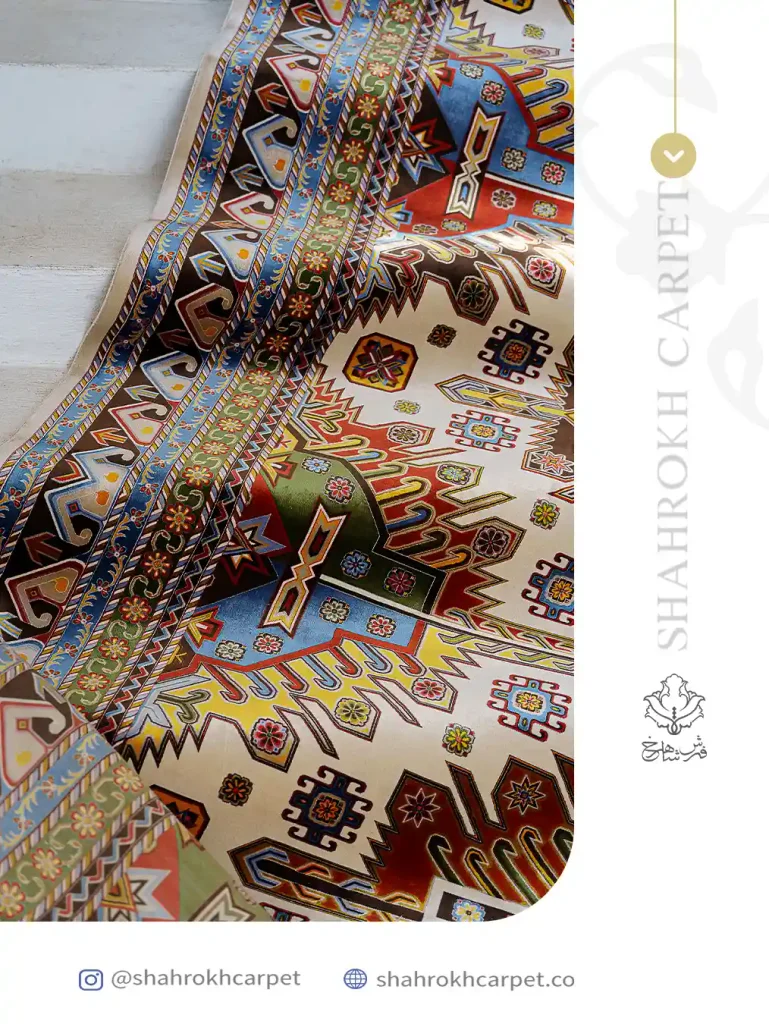
Classical patterns remain relevant to customers who appreciate symmetry, ornament, and the established visual language of Persian carpets.
Central medallions, floral compositions, detailed borders, and traditional motifs can complement formal living rooms, elegant reception areas, and interiors furnished with carved wood, decorative lighting, and classic furniture.
The fine weave of a 1700 reed rug allows these designs to retain their intricate character, making the rug suitable for spaces where pattern definition and decorative balance are important.
French-Inspired Designs
French-inspired interiors often combine refined proportions, restrained elegance, ornamental details, and carefully balanced colors.
Rugs influenced by this aesthetic can work well with elegant furniture, decorative mirrors, sculptural accessories, and sophisticated neutral palettes. Their role is often to unite the different elements of the room without overpowering them.
For retailers, these designs can appeal to customers who prefer European decorative styles but appreciate the intricate workmanship associated with fine Persian-inspired weaving.
Versace-Inspired and Statement Designs
Bold ornamental motifs and distinctive decorative compositions can appeal to customers who want their interiors to express individuality.
Versace-inspired designs, where offered, may suit contemporary luxury spaces, fashion-influenced interiors, and rooms where the rug is intended to create a strong visual statement.
Retailers should describe such products accurately as inspired by a design aesthetic where appropriate and avoid implying an official brand affiliation or authorization unless one exists.
Royal and Regal Designs
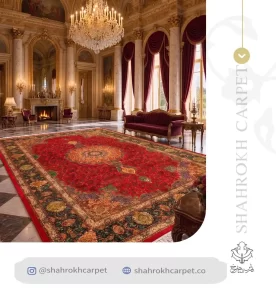
Royal-style patterns can bring a sense of formality and visual richness to expansive living rooms, prestigious reception spaces, and interiors furnished with statement furniture and decorative accessories.
Their appeal often depends on the balance between ornament and space. A well-chosen rug can complement an elaborate interior, installed as decorative accessory for walls or other furniture complementary, or adding a luxurious harmony with other antique staffs, furniture or or even accessories from the Versace brand. while a more restrained room may benefit from a design that provides a single focal point.
For a premium showrooms or art galleries collecting luxury accessories, these different design categories make it possible to create a coherent collection while addressing customers with distinct aesthetic preferences.
More Than a Floor Covering: A Decorative Piece With Multiple Uses
One of the strongest selling points of fine 1700 reed rugs is their potential to serve purposes beyond conventional floor placement.
For luxury customers, the distinction between a rug and a decorative object is not always fixed. A finely patterned piece may be selected because of its colors, proportions, craftsmanship, or relationship to other objects in the room.
This creates several presentation opportunities for retailers.
Decorative Table Rugs
A small rug or rug-sized decorative piece can be displayed on an appropriate table, console, or other suitable surface where its pattern and finishing can be appreciated at close range.
In this setting, the rug becomes part of an arrangement alongside books, sculptures, decorative boxes, or selected antiques. Its fine details are visible without requiring the customer to view it from across the room.
Retailers should ensure that the dimensions, weight, and construction are appropriate for the intended placement and use.
Wall Displays and Artistic Arrangements
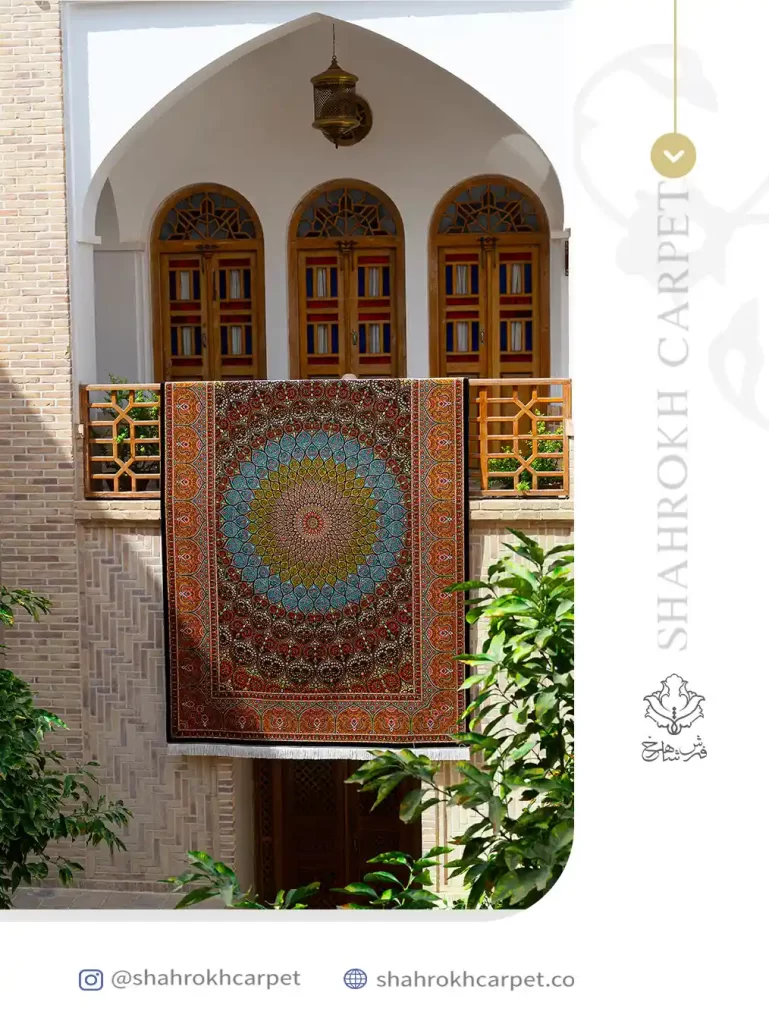
Selected rugs can also be presented as wall hangings or decorative textile pieces. This approach is particularly relevant to customers who collect art, textiles, and distinctive interior accessories.
A wall-mounted rug can introduce pattern, color, and textile craftsmanship into a space where conventional artwork might otherwise be displayed. It can work in a private study, a formal sitting room, a boutique interior, or a carefully curated gallery setting.
Any wall display should use suitable support and mounting methods that protect the textile and distribute its weight appropriately.
Luxury Living Rooms and Formal Interiors
Of course, floor placement remains an important application.
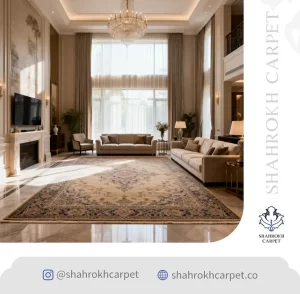
In a luxury living room, a fine rug can establish the visual relationship between sofas, occasional tables, accent chairs, and decorative objects. Its pattern can anchor the furniture arrangement while contributing color and detail to the wider interior.
The low pile and relatively slim construction can be particularly appealing where the customer prefers a refined appearance rather than a thick, plush carpet.
The key is to select the rug according to the room’s proportions, furniture layout, expected foot traffic, and overall design concept.
For retailers, demonstrating these different uses can help customers see the rug as a versatile decorative purchase rather than a product limited to a single function.
Building Premium Rug Showroom Inventory
A luxury showroom should make it easy for customers to understand the character and purpose of each product.
For 1700 reed rugs, retailers can begin by selecting a balanced group of designs across several visual categories: vintage-inspired, classical Persian, French-inspired, statement patterns, and royal compositions.
Size selection should reflect the local market. Smaller formats may be particularly suitable for decorative tables, intimate rooms, or wall displays, while larger rugs can anchor formal living areas and spacious interiors.
Color selection deserves equal attention. Ivory, muted gold, soft blue, charcoal, restrained reds, and carefully balanced neutral tones can support a range of sophisticated interiors. More expressive palettes may be appropriate for customers seeking a stronger decorative statement.
Color palette selection for a retailer depends on the taste of culture and trends of the year.
Presentation should emphasize the product’s actual strengths. Good lighting helps reveal pattern detail and surface sheen. Displays that allow customers to see the full design make it easier to appreciate the composition and proportions.
Sales staff should also have accurate product information available, including dimensions, fiber composition, construction, finishing details, and care requirements.
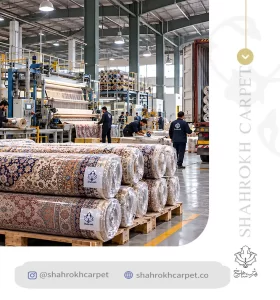
For wholesale buyers, consistency matters as much as appearance. Before committing to a large order, retailers should confirm the availability of selected designs, agree on specifications, review samples where possible, and establish clear expectations for quality and delivery.
These practices help create an assortment that is attractive to customers and practical to manage commercially.
Sourcing Fine Persian Rugs for International Markets
For retailers outside Iran, working directly with an established manufacturer can provide a useful starting point for building a specialized collection of Persian-inspired rugs.
However, the value of a sourcing relationship depends on more than the manufacturer’s location or product range. Buyers should evaluate technical specifications, finishing quality, communication, order coordination, packaging, and export documentation.
When considering Shahrokh as a sourcing partner, international retailers should request current information about the available 1700 reed designs, the materials used in each model, the hand-finishing processes involved, and the sizes available for export.
It is also important to discuss minimum order quantities, production schedules, payment arrangements, shipping methods, and any requirements specific to the destination market.
For retailers seeking a consistent visual identity, it may be useful to identify a core group of designs that can form the foundation of the collection, with additional patterns introduced according to customer demand.
Accurate product descriptions are particularly important when selling internationally. The distinction between machine-woven construction, silk-design appearance, and hand-finished details should be clear in product listings, sales materials, and customer communications.
A transparent approach allows the retailer to explain the product confidently and helps establish expectations before the purchase.
The objective is to develop a sourcing relationship that supports repeat business, dependable product information, and a collection tailored to the retailer’s customers.
Why Luxury Retailers Should Stock Shahrokh’s 1700 Reed Rugs
Shahrokh’s 1700 reed rugs offer luxury retailers an opportunity to expand their collections with finely detailed, Persian-inspired designs at a more accessible price point than comparable handwoven silk carpets. Their intricate patterns, refined silk-design appearance, low pile, and selected hand-finished details make them distinctive additions to a premium showroom.
These rugs can appeal to a broader audience, including interior designers, antique enthusiasts, collectors of decorative objects, and homeowners seeking distinctive pieces for sophisticated interiors. For retailers, they offer additional design options and price points while complementing, rather than replacing, traditional hand-knotted rugs.
Successful merchandising begins with selecting designs that suit the target market. Understated floral patterns may appeal to customers who favor elegant European interiors, while elaborate traditional or statement designs may better suit richly decorated spaces. A carefully curated collection is often more effective than a large assortment without a clear design direction.
Equally important is how the rugs are presented. Sales staff should highlight their fine weave, pattern clarity, low pile, silk-design aesthetic, and specific hand-finished details, while accurately explaining their machine-woven construction. Demonstrating how a rug complements antique furniture, contemporary artwork, or other decorative objects helps customers appreciate its versatility and artistic character.
By combining thoughtful selection with informed presentation, luxury retailers can position Shahrokh’s 1700 reed rugs as distinctive decorative pieces that meet varied customer preferences and strengthen the appeal of their premium inventory.
Explore Shahrokh’s 1700 Reed Collection
Shahrokh’s 1700 reed silk-design rugs combine intricate Persian-inspired patterns, refined finishes, and a diverse range of styles suited to contemporary luxury interiors.
For international rug galleries, interior designers, and wholesale buyers, the collection offers an opportunity to expand a premium assortment with distinctive decorative pieces.
Explore Shahrokh’s collection and contact our team to discuss available designs, wholesale orders, and export opportunities.